

AI Agents and Chatbots
AI assistants for everyday work
VirIQ builds custom assistants for sales, support, intake, and internal tasks with approved sources, review rules, and human handoff points.
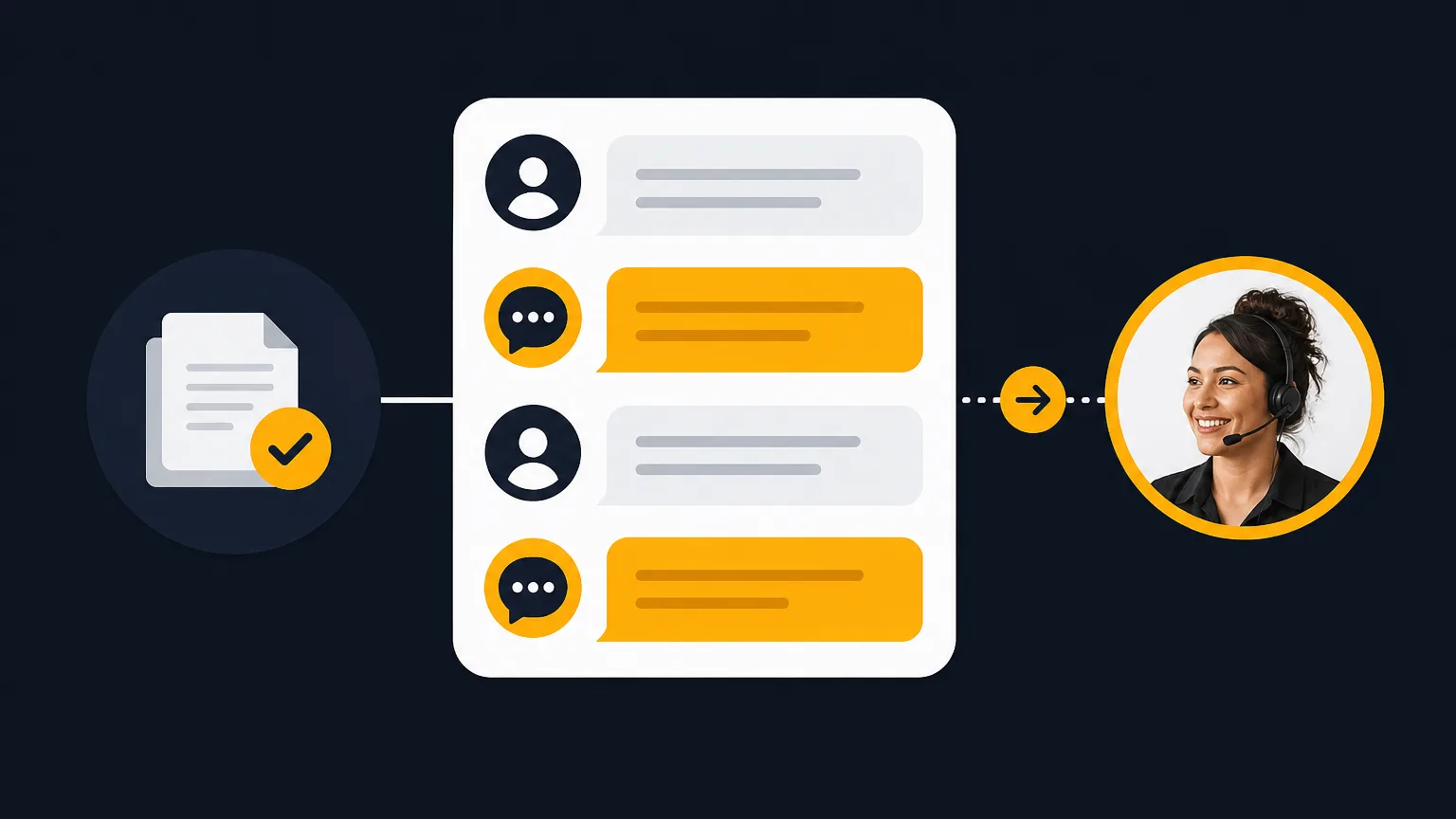
From idea to working use case
Turn AI interest into a useful business assistant
You need an assistant that handles repetitive questions and tasks, uses your business information, and brings in your team when human judgment is needed.
The concept sounds useful, but the day-to-day fit is still fuzzy
Repetitive questions consume staff time.
- Customers and staff get different answers to the same question
- Teams lose time repeating intake steps and checking missing details
An assistant that saves your team time
VirIQ helps you choose the tasks to automate, connect your business information, and decide when your team should review a response or take over.
- Faster routine responses
- Better intake flow
- Safer customer experience
What VirIQ can implement
What goes into a scoped AI assistant
Start with the questions or tasks that take up your team’s time. Then agree what the assistant can handle and when a person should step in.
Use-case requirements
Define the job, users, inputs, and expected responses before build.
Approved knowledge connections
Connect the assistant to approved content, documents, or business systems.
Response limits and handoff
Set boundaries, blocked actions, and points where staff take over.
Testing and rollout review
Check outputs, edge cases, and readiness before wider release.
Where conversational tools help most
The strongest starting point is usually a repeat task with approved information, predictable steps, and a real business bottleneck.
Customer questions and support
Answer common service, policy, or product questions from approved content before a team member steps in.
Lead intake and qualification
Collect the right details early so sales or service teams can respond with better context.
Internal knowledge access
Help staff find procedures, product details, or operating guidance without searching across scattered files.
Workflow guidance
Walk users through repeat actions, checkpoints, and next steps for tasks that follow known rules.
System-connected assistance
Pull from approved business tools or knowledge sources when the project requires more than a standalone chat box.
Governed public release
Define approved sources, response limits, and person-to-person escalation before the assistant reaches customers.
How the work moves forward
A structured path from use case to rollout
VirIQ keeps the process grounded in scope, approved information, testing, and operational fit.
Discovery and use-case selection
Start with the business task, the users, and the outcome the assistant should support.
Requirements and boundaries
Define approved sources, tool access, response limits, and the points where a person should take over.
Build and integration
Configure the assistant and connect the systems or knowledge sources the project depends on.
Testing and review
Check responses, edge cases, escalation behavior, and operational fit before wider release.
Launch and refinement
Deploy the assistant, monitor how it performs, and improve it as real usage reveals gaps.
Common questions about custom assistants
What is an AI agent in a business setting?
It is an assistant that helps with specific business tasks, such as answering common questions, collecting project details, finding information, or moving work to the next step. You decide what it can do and when your team takes over.
How is this different from a basic chatbot?
A basic chatbot often stays limited to simple scripted replies. A custom assistant can use approved knowledge, follow business rules, and connect to other systems when the project requires it.
Can this be used safely with customer-facing conversations?
Yes, when the project starts with approved sources, access limits, review steps, and a documented path for passing the conversation to a person.
Do we need to know the exact use case before we contact VirIQ?
No. Many buyers start with a rough idea or a problem they want to reduce. VirIQ can help narrow that into a practical first use case.
Can an assistant connect to our existing tools?
That may be part of the project. VirIQ also offers software and CRM integration, business process automation, and custom development when the assistant needs connected systems.
Will this replace our team?
The goal is to support repeat work, speed up response, and reduce manual effort. Human review still matters for exceptions, judgment calls, and higher-stakes interactions.
Trust comes from scope, rules, and review
The work is guided by defined scope, approved sources, testing, and review.
Agree the tasks before building
Each project should start with one business task, one user need, and one measurable operational purpose.
Approved information sources
Responses should come from the materials, systems, and content you authorize for the project.
Human handoff points
The system needs named moments when staff review, approve, or take over the interaction.
Testing before release
Customer-facing behavior should be reviewed against expected questions, exceptions, and escalation paths.